What a water-wise conversion involves
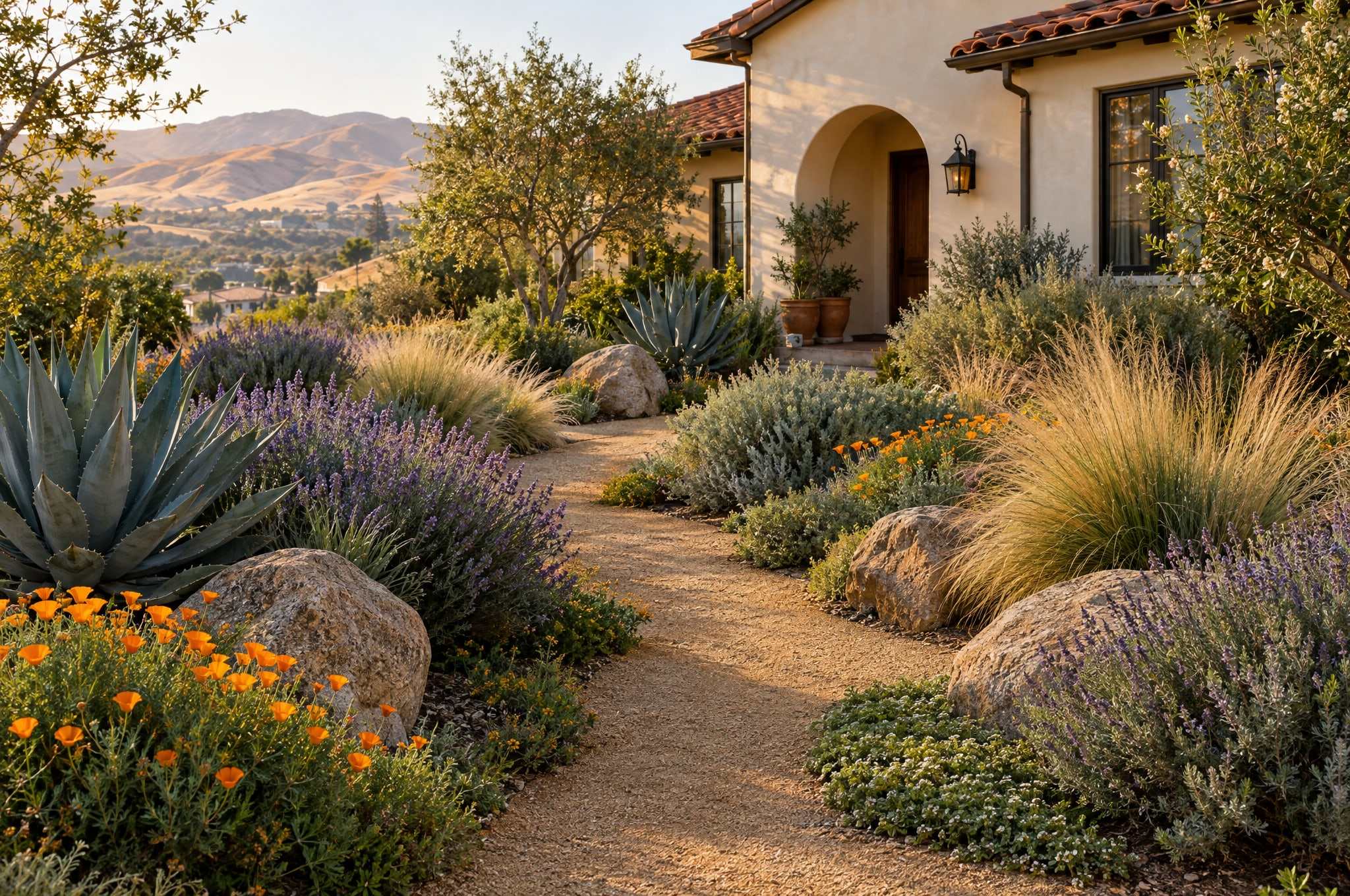
A drought-tolerant conversion replaces lawn with plants, drip irrigation and permeable ground cover suited to Santa Clarita’s hot, dry summers. Done well, it uses far less water than turf, needs no weekly mowing and still looks like a planted garden rather than a gravel lot.
Most SCV conversions focus on the parts of the yard that are hardest to water and least used: front lawns, parkway strips between the sidewalk and curb, and slopes. Those are exactly the areas where spray irrigation wastes the most water to runoff and overspray.
Plants that thrive in the SCV
The plants that do best in Santa Clarita are California natives and Mediterranean-climate plants adapted to dry summers, winter rain, intense sun and clay soil. Here are reliable choices we use often.
| Plant | Type | Why it works here |
|---|---|---|
| Ceanothus (California lilac) | Native shrub | Blue spring flowers; handles heat once established |
| Manzanita | Native shrub | Sculptural red bark; needs good drainage |
| Salvias (sages) | Native and Mediterranean | Long bloom, attracts hummingbirds and bees |
| California buckwheat | Native shrub | Tough, low-water, good for slopes |
| Deer grass | Native grass | Fountain-shaped clumps, softens rock and gravel |
| Toyon | Native shrub | Evergreen screen with winter berries |
| Lavender and rosemary | Mediterranean | Fragrant, sun-loving, low-water |
| Agave and aloe | Succulent | Bold structure for the hottest spots |
Some natives, especially manzanita, need sharper drainage than heavy SCV clay provides. We plant those on mounds or in amended areas, and choose clay-tolerant plants for the flat, heavy spots.
Group plants by water needs
The single most important design rule is to group plants by how much water they need. That practice, called hydrozoning, lets each drip zone run on its own schedule. Mixing a thirsty plant with succulents on the same line means one of them will always be watered wrong.
Drip irrigation replaces spray
Drip irrigation delivers water slowly at each plant’s root zone instead of spraying it across the surface. On SCV clay and slopes, that means almost no runoff, very little evaporation and no water landing on walls, walks or the street.
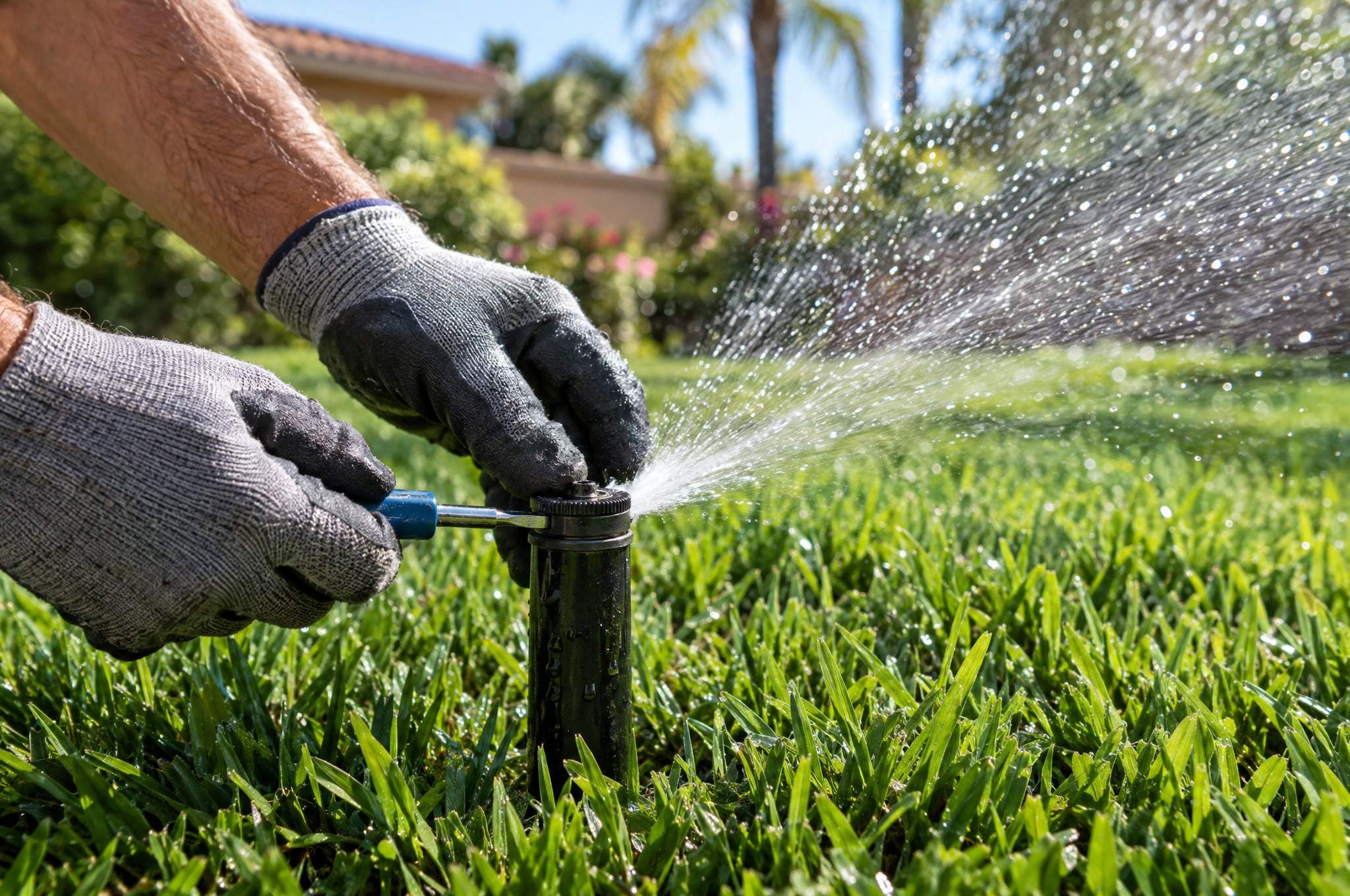
During a conversion, we cap or convert the existing spray zones, install drip emitters or inline drip at each plant, add a filter and pressure regulator, and set the controller with longer, less frequent run times that suit drip. If other parts of the system still water lawn, our sprinkler repair service can tune those zones at the same time.
Planning steps that save headaches
A few planning steps come before any digging, and they are easier to handle early.
- Check SCV Water’s current programs. SCV Water offers conservation programs that have included turf replacement. Terms and amounts change, and many programs require approval before any grass is removed. Check SCV Water’s current programs first, since removing the lawn early can affect eligibility.
- Get HOA approval. Many associations, particularly in Valencia and Stevenson Ranch, have landscape standards and require plans to be approved before work starts. We can provide a plant list and layout for your application.
- Decide what stays. Keep any lawn that gets used, and convert the areas that do not.
- Plan for fall planting. Fall planting gives roots the cool, rainy months to establish before the first summer, which greatly improves survival.
Rock, decomposed granite and mulch
Hardscape materials finish a water-wise yard and keep weeds and dust down. Decomposed granite makes firm, natural-looking paths and seating areas. River rock and boulders add structure and handle drainage swales. Bark or wood-chip mulch around plants keeps roots cooler and soil moist longer, and suits natives that prefer an organic layer.
We avoid covering the whole yard in rock. Large expanses of bare stone hold heat against the house in summer, and plants are what make the yard feel like a garden.
Caring for the yard after installation
A new water-wise yard is lower maintenance, not no maintenance. The first summer is the most important, when new plants still rely on regular drip watering. After that, most of the work is seasonal: cutting back salvias and grasses in late winter, refreshing mulch as it breaks down, checking drip emitters for clogs or chewed lines, and pulling the occasional weed that sprouts in the gravel after winter rain.
Is it right for your yard?
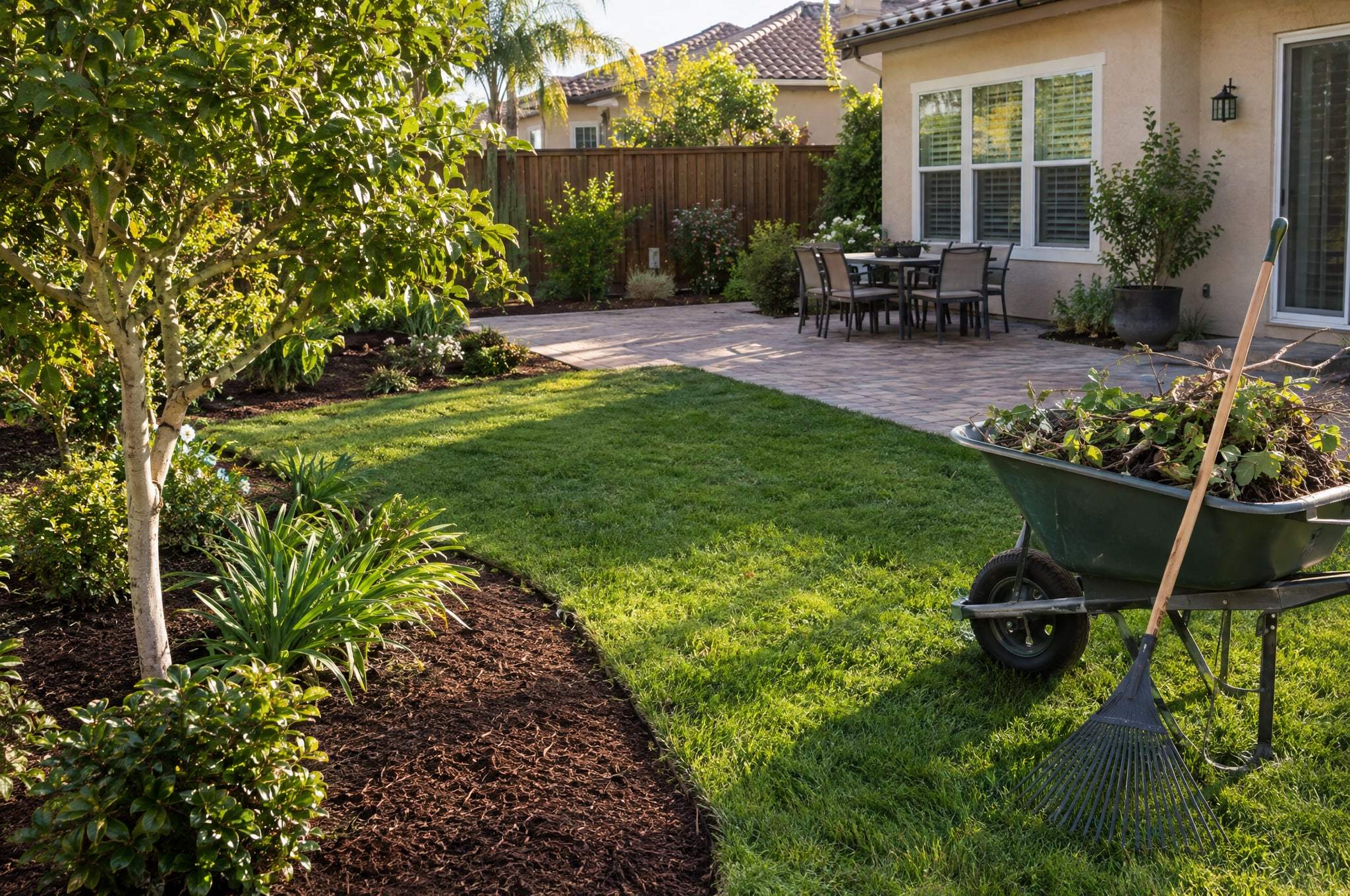
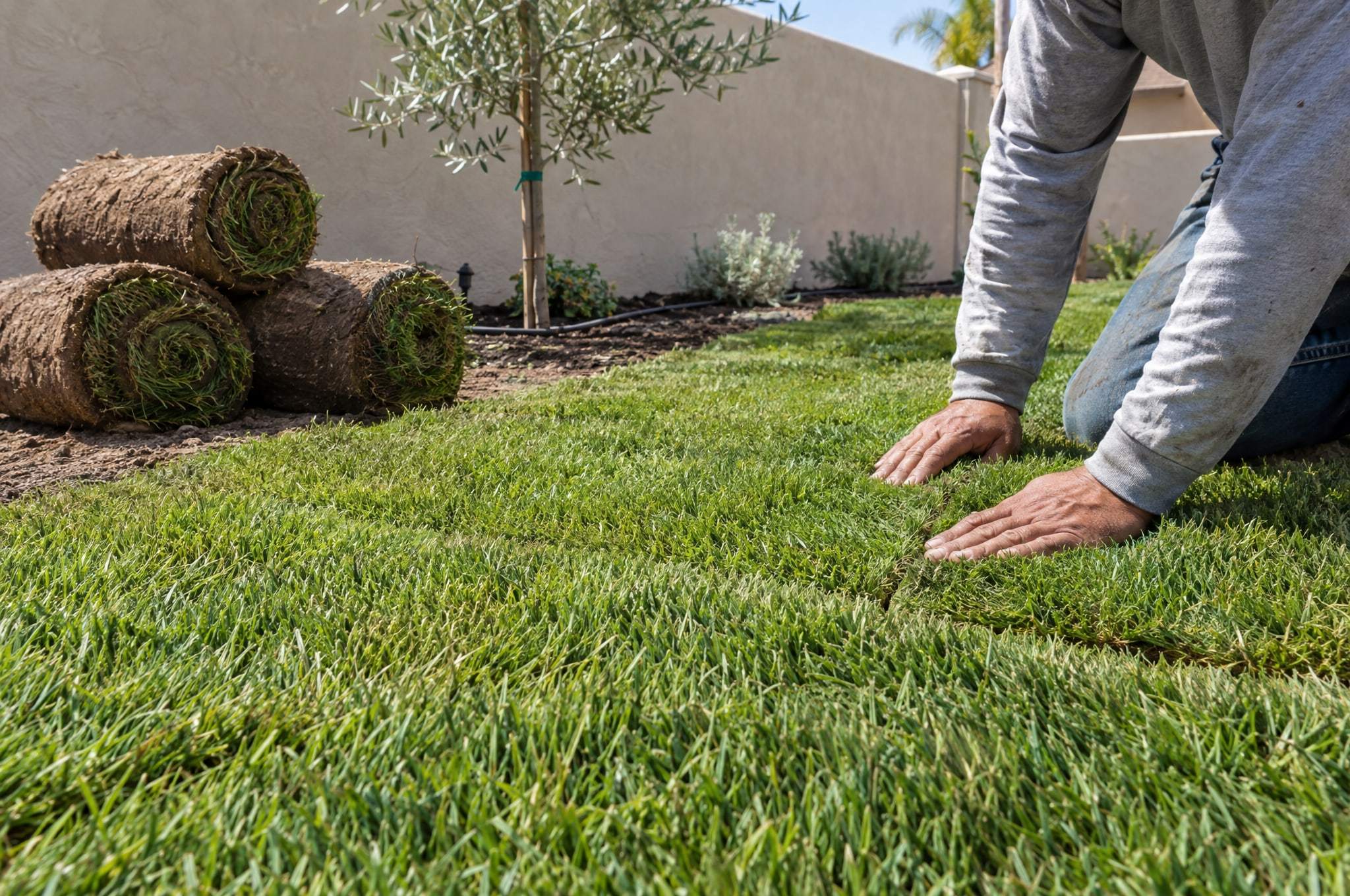
A conversion makes sense if you are tired of watering and mowing turf nobody uses, fighting runoff on slopes, or replacing a lawn that never recovers from summer. If you want to keep a lawn but start fresh, sod installation may be the better fit. For larger, sloped properties, such as those in Sand Canyon, a conversion can also be combined with a yard cleanup to clear dry growth first. Request a free walk-through and we will price your project.