How lawn fertilization works in the SCV
Lawn fertilization in Santa Clarita works best when the timing follows your grass type rather than a generic national calendar. Tall fescue, the most common lawn here, grows hardest in spring and fall and nearly stalls in summer. Bermuda and St. Augustine do the opposite. Feeding the wrong grass at the wrong time wastes product and can make problems worse.
That is the core of our six-visit program: the same number of visits for every lawn, but a different schedule and product mix depending on what is growing in your yard.
Cool-season vs warm-season feeding
Cool-season fescue is fed mainly in fall and spring, while warm-season Bermuda and St. Augustine are fed through late spring and summer. Here is how that plays out across a typical SCV year.
| Season | Tall fescue lawns | Bermuda and St. Augustine lawns |
|---|---|---|
| Late winter | Pre-emergent plus a light feeding | Pre-emergent while the grass is still dormant |
| Spring | Moderate feeding for green-up | First feeding once the lawn greens up |
| Summer | Light or no nitrogen; spot-treat weeds | Main feeding period |
| Fall | Main feeding to rebuild roots | Taper off as growth slows |
A mixed lawn, which describes a lot of older SCV yards, gets a program weighted toward the grass you want to keep.
Why slow-release nitrogen
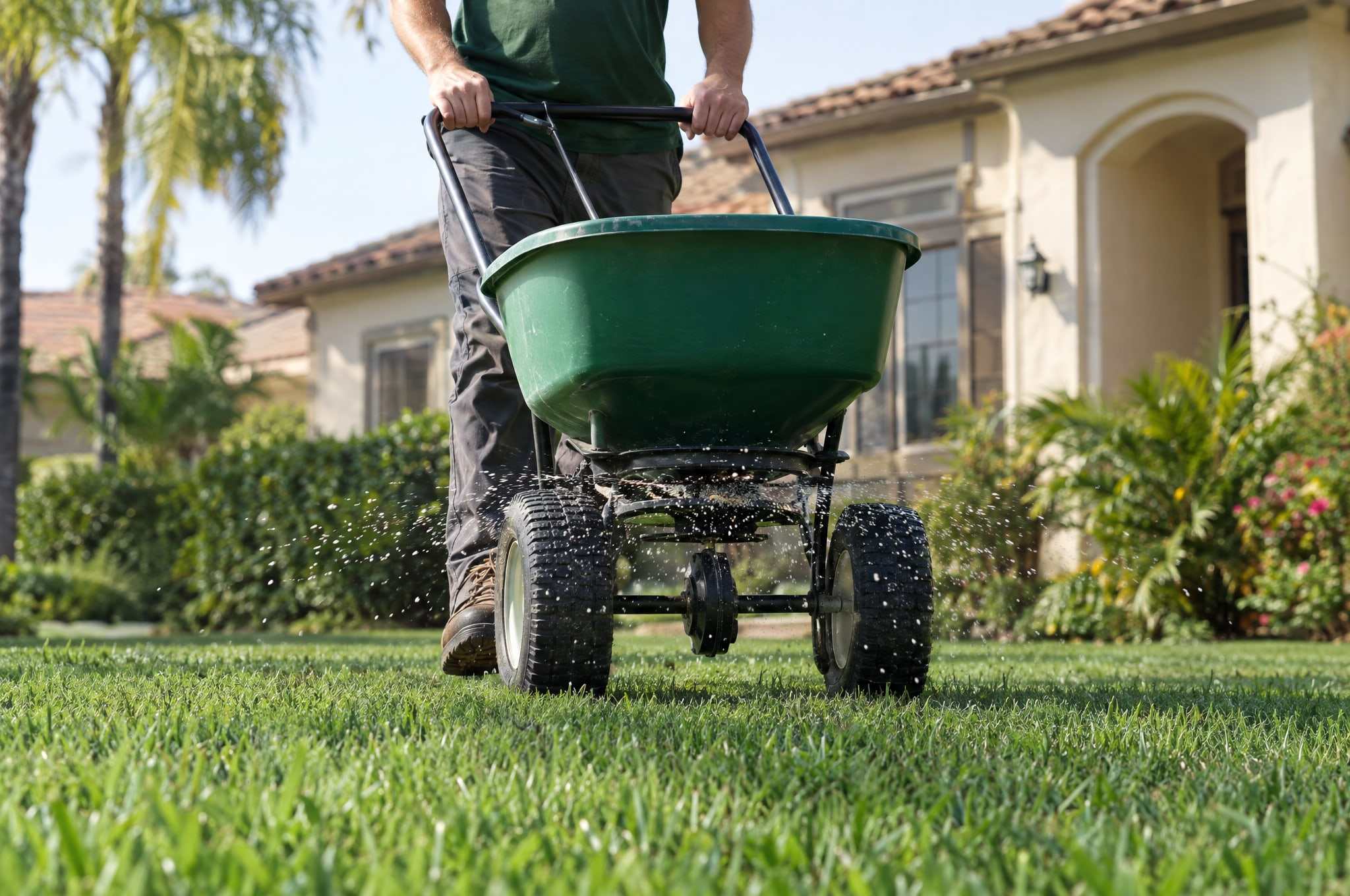
Slow-release nitrogen feeds the lawn steadily over several weeks instead of all at once. Quick-release fertilizer produces a fast surge of green and then a crash, along with soft growth that wilts in the heat and needs mowing twice as often. On SCV clay, a big quick-release dose can also wash off with sprinkler runoff before the roots ever see it. Slow-release products avoid most of that.
Preventing crabgrass before it starts
Crabgrass is prevented with a pre-emergent applied in late winter, before the soil warms enough for the seed to germinate. Once crabgrass is up, pre-emergent does nothing, and the weed spends the summer spreading seed for next year.
The window in the Santa Clarita Valley usually falls in late January through February, earlier on south-facing lawns that warm quickly and later in shaded or low-lying yards. A second, later pre-emergent can help with spurge, which tends to germinate after crabgrass as summer heat builds.
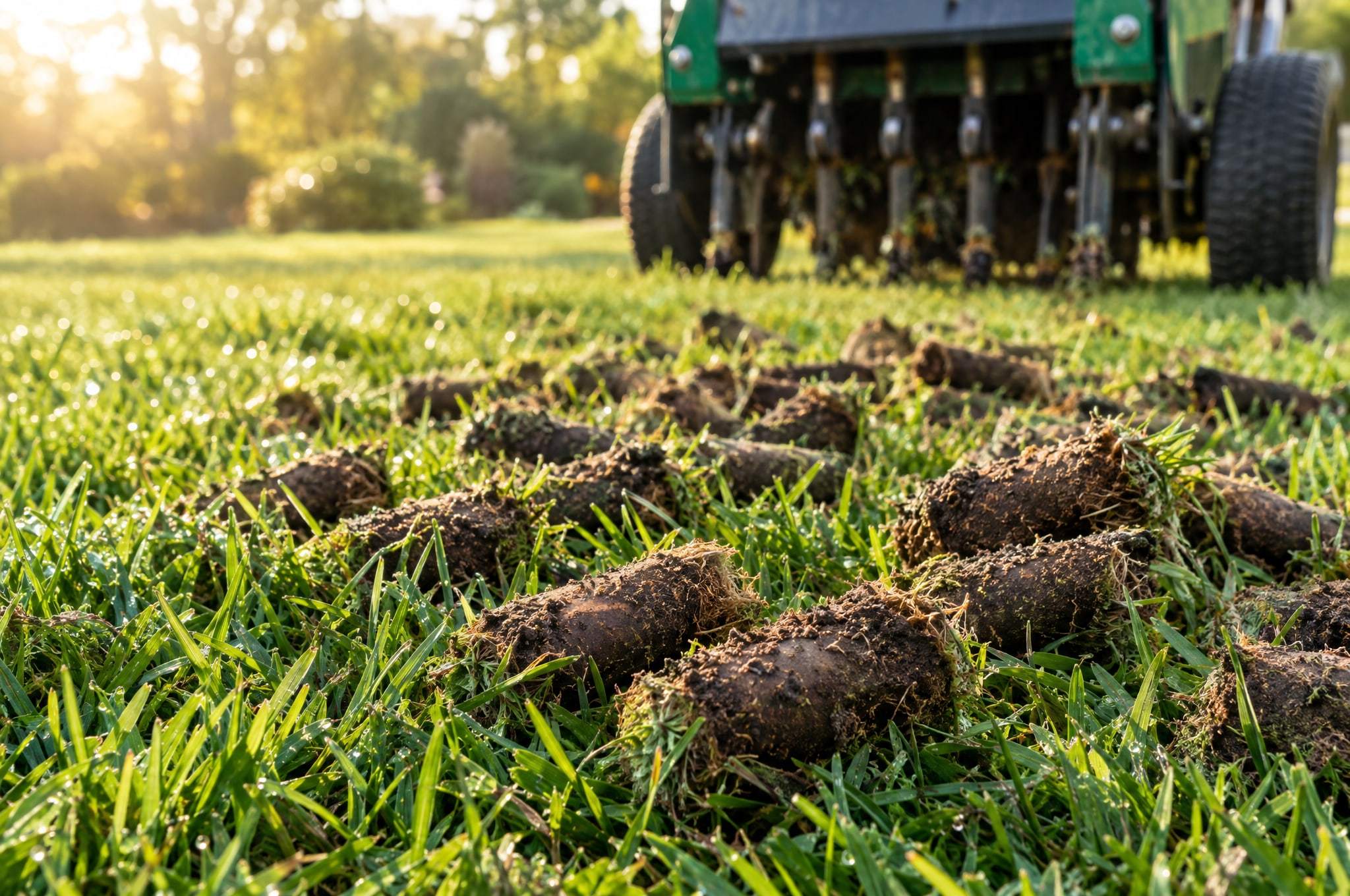
One catch: pre-emergent stops grass seed too. If you plan to overseed, the two have to be scheduled around each other. That is one reason we coordinate this program with aeration and overseeding instead of treating them as separate jobs.
The weeds we see most in Santa Clarita lawns
The most common weeds in SCV lawns are crabgrass, spurge, nutsedge and creeping Bermuda, and each one needs a different approach.
- Crabgrass is stopped with pre-emergent; escapes are spot-treated in summer.
- Spurge is a flat, low weed that loves thin turf along hot driveways and walkways. Thickening the turf is the long-term fix.
- Nutsedge is a bright green, fast-growing sedge that thrives where irrigation keeps soil soggy. It needs a sedge-specific product, and pulling it usually leaves tubers behind that resprout.
- Bermuda creep in fescue is a grass, not a broadleaf weed, so standard lawn weed products do not control it.
- Broadleaf weeds such as dandelion, clover and oxalis respond well to spot treatment.
Watering in and the first few days
Most granular fertilizer needs to be watered in soon after it goes down. Water moves the nutrients off the grass blades and into the root zone, and it keeps granules from sitting on the leaf surface on a hot afternoon. After each visit we leave instructions for that specific application, because a feeding and a weed treatment are handled differently. Broadleaf spot treatments usually need to stay dry on the leaf for a while to work, so running the sprinklers right after one can wash it off before it does its job.
If a Santa Ana wind event or a heat wave lands on an application day, we adjust the schedule. Products that work well on a mild morning can be wasted, or stress the lawn, in hot, dry wind.
What fertilizer cannot fix
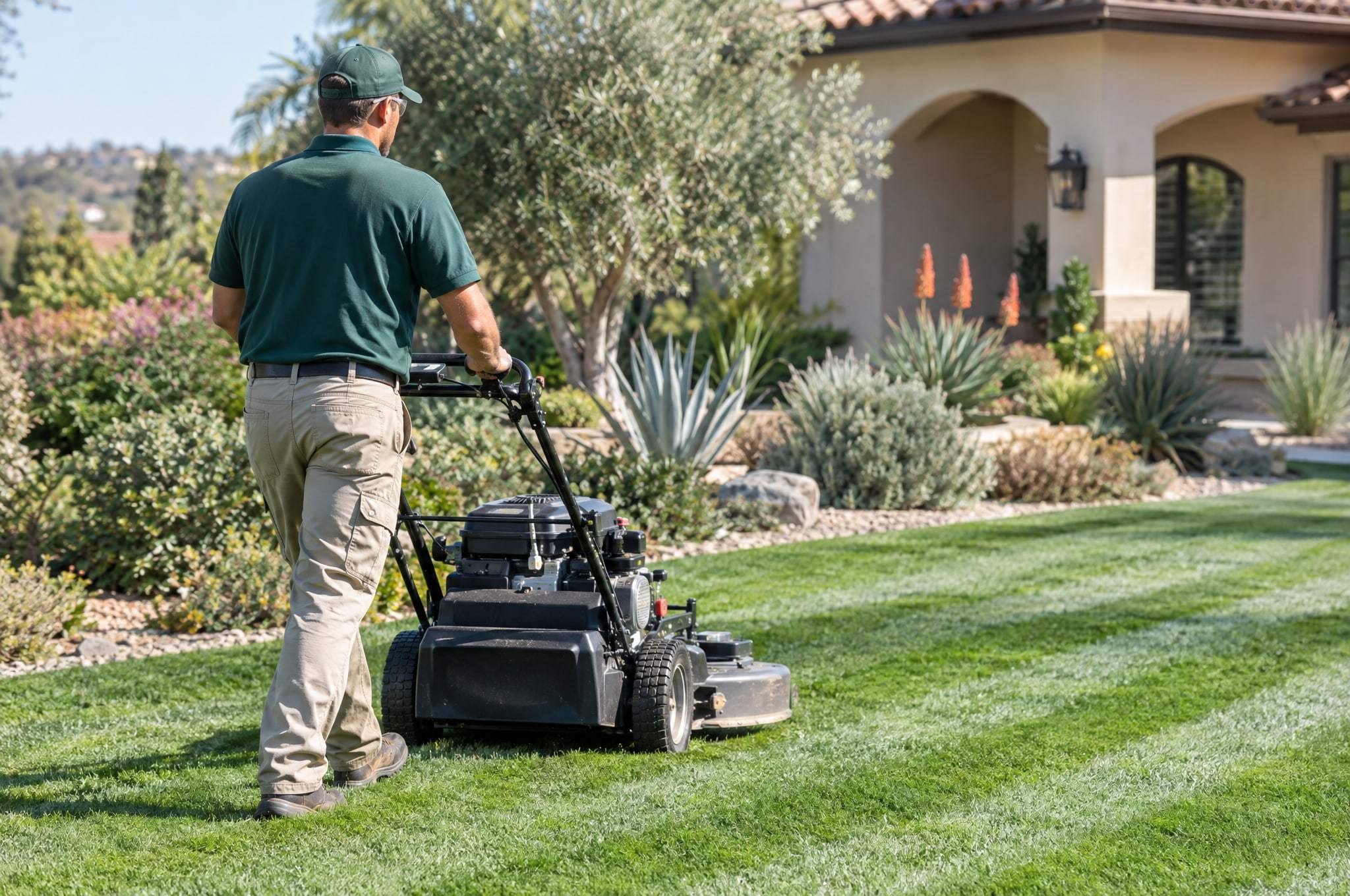
Fertilizer will not fix compacted clay, broken sprinklers or a mowing height that is too low. If the lawn is dry in stripes or circles, the problem is coverage, and our sprinkler repair visit will find it faster than another bag of fertilizer. If water puddles and runs off, the soil likely needs aeration first. And if fescue is being cut at Bermuda height, it will thin out no matter how well it is fed, which is why we often pair this program with regular lawn mowing.
We run fertilization routes throughout the valley, including Stevenson Ranch, where many HOA lawns are tall fescue. Per-application pricing is listed on our pricing page.