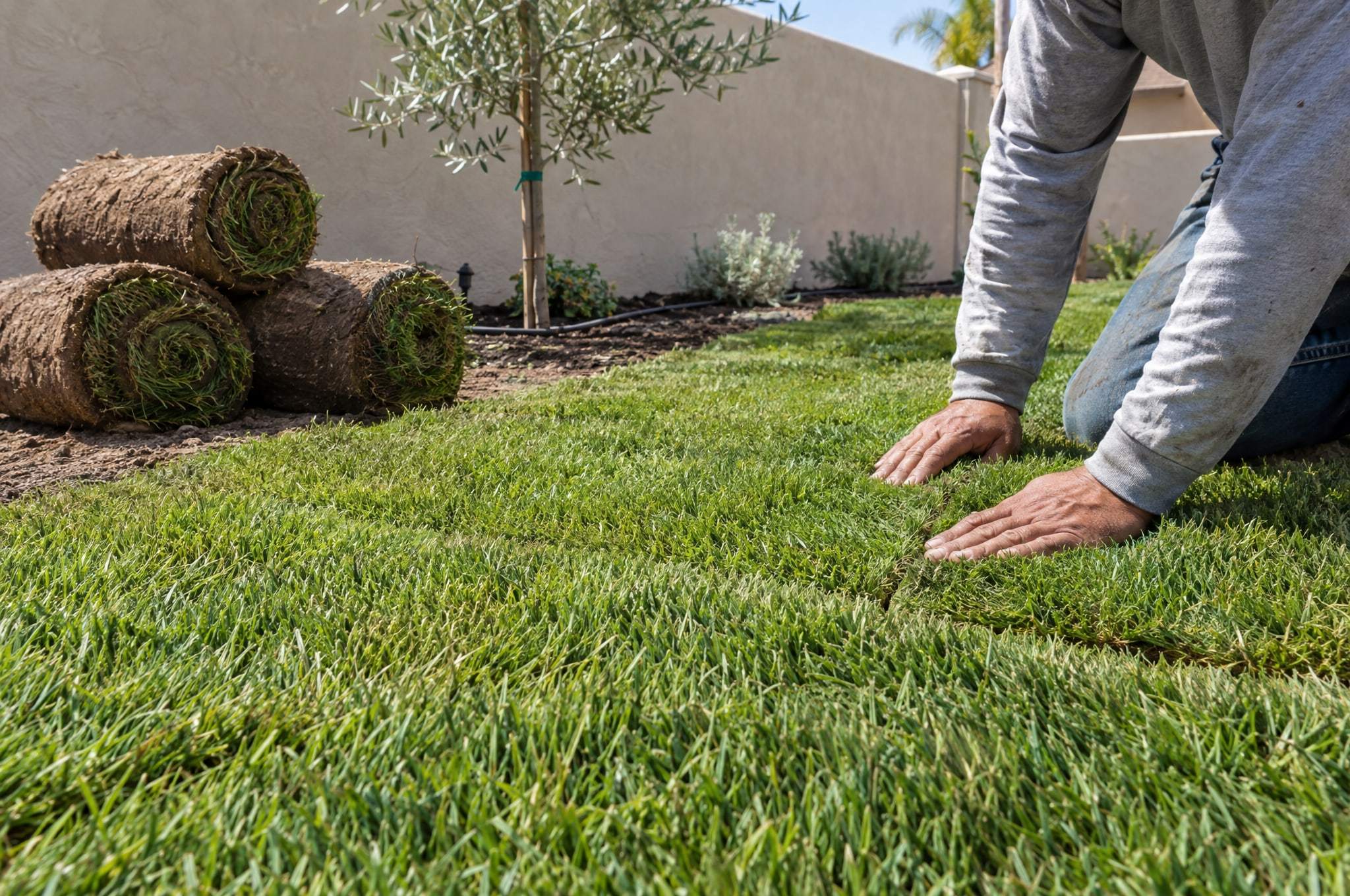
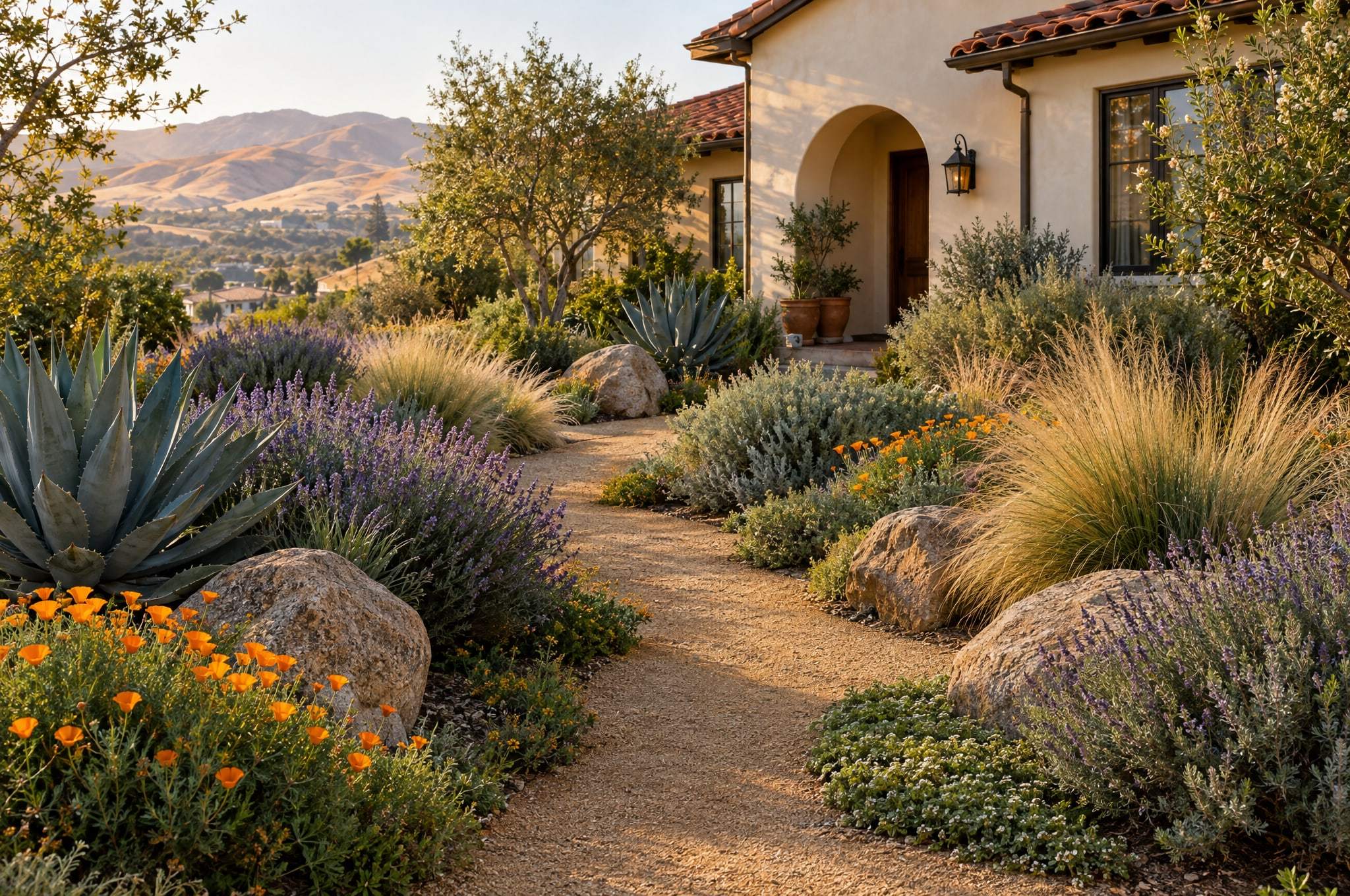
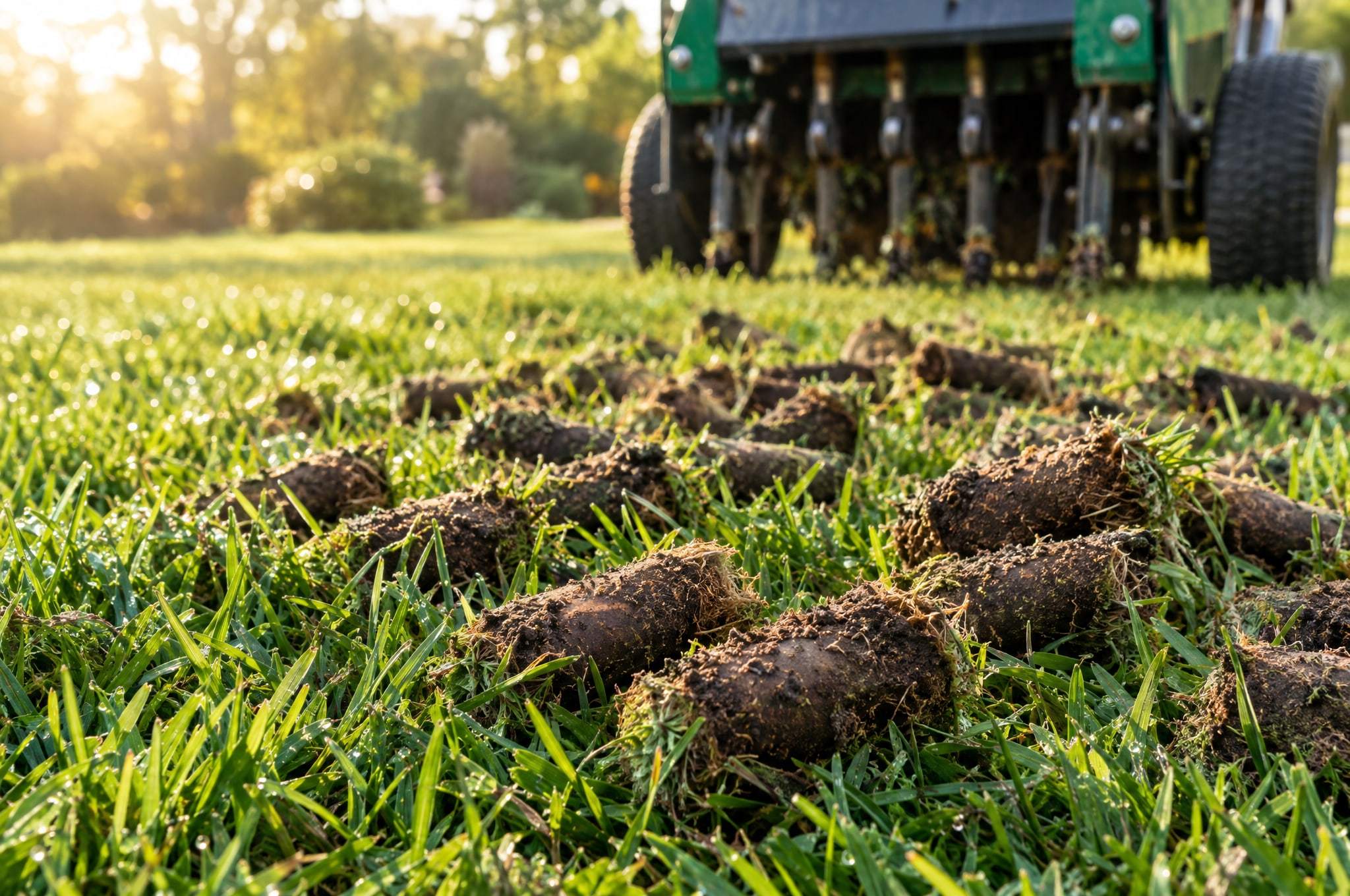
Grass comparison
Best Grass for Santa Clarita Lawns: Fescue vs. Bermuda vs. St. Augustine
There is no single best grass for every Santa Clarita yard, but there is a best grass for your sun, water budget and how you use the lawn. This guide compares the grasses that actually grow well in the SCV, plus the low-water options worth a look.
Key takeaways
- Tall fescue gives the greenest year-round look in the SCV but uses the most water and struggles in peak summer heat.
- Bermuda handles heat, wear and drought best of the common lawns, but it goes tan in winter and invades beds and neighboring fescue.
- St. Augustine is the warm-season choice for partial shade, though it does not tolerate heavy foot traffic well.
- Kikuyu is an aggressive invader in many SCV lawns, not a grass anyone should plant on purpose.
- UC Verde buffalograss and native Carex sedges cut water use substantially for homeowners willing to accept a softer, more natural look.
Which grass is best for Santa Clarita?
For most Santa Clarita homeowners who want a green lawn twelve months a year, tall fescue is the best fit; for those who want the toughest, most water-efficient traditional lawn, Bermuda is. The right answer depends on three things: how much sun the yard gets, how much water you are willing to use, and whether the lawn gets played on or mostly looked at.
The SCV is a tough place for turf. Summer highs regularly reach 95 to 105°F, humidity is low, Santa Ana winds dry things out in fall and winter, and a lot of the valley sits on compacted clay left over from tract grading. Grass that thrives in coastal Los Angeles can struggle here, and some grasses that look great in a catalog never make it through an August in Canyon Country.
UC Agriculture and Natural Resources and the UC IPM program publish turf guidance for California’s climate zones, and their general recommendations line up with what we see in SCV yards: match the grass to the site, and you water and spray less for the life of the lawn.
Santa Clarita grass comparison table
The table below compares the grasses that show up in SCV yards, rated relative to each other for local conditions.
| Grass | Water use | Heat tolerance | Shade tolerance | Wear tolerance | Look | Best for |
|---|---|---|---|---|---|---|
| Tall fescue | High | Moderate | Moderate | Good | Dark green, coarse blade, green all year | Classic front lawns, HOA neighborhoods, year-round color |
| Common Bermuda | Low to moderate | Excellent | Poor | Excellent | Fine blade, tan in winter | Sunny yards, kids and dogs, lower water bills |
| Hybrid Bermuda | Low to moderate | Excellent | Poor | Excellent | Very fine, dense, carpet-like, tan in winter | Manicured sunny lawns, play areas |
| St. Augustine | Moderate | Very good | Good | Fair | Wide, flat blue-green blades, tan to brown in winter | Partial shade, lower-traffic lawns |
| Zoysia | Low to moderate | Very good | Moderate | Very good | Fine to medium, dense, slow to green up | Sunny lawns where slow growth means less mowing |
| Kikuyu | Moderate | Excellent | Moderate | Excellent | Coarse, light green, spongy | Nobody; it is an invader to control, not plant |
| UC Verde buffalograss | Very low | Excellent | Poor | Fair | Soft, fine, gray-green, informal | Low-water lawns where a meadow look is welcome |
| Carex (native sedges) | Low | Good | Good | Poor to fair | Soft, flowing, unmown or rarely mown | Shady spots, slopes and turf-replacement areas |
Tall fescue: the SCV default
Tall fescue is the most common lawn grass in the Santa Clarita Valley because it stays green through winter and handles moderate shade better than the warm-season grasses. Modern turf-type fescues have finer blades than the old pasture types, and most fescue sod sold in Southern California is a blend of several varieties.
The tradeoff is water and summer stress. Fescue is a cool-season grass, so July and August are survival months, not growing months. It also grows in clumps rather than spreading, so bare spots do not fill themselves in. That is why fescue lawns here need aeration and overseeding every fall, from mid-September through October, to stay thick. Mow it at 3 to 4 inches in summer and 2.5 to 3 inches in the cooler months.
Who should choose fescue
Choose fescue if year-round green matters, your HOA expects it, or part of the lawn gets afternoon shade from the house or trees. Plan on higher water use than any warm-season grass.
Bermuda: common and hybrid
Bermuda is the toughest traditional lawn grass for Santa Clarita heat and wear. It roots deeply, recovers fast from damage, and uses noticeably less water than fescue during summer.
Common vs. hybrid Bermuda
Common Bermuda grows from seed, has a slightly coarser blade, and produces seed heads. Hybrid Bermudas are planted as sod, stolons or plugs, form a denser, finer, more carpet-like turf, and look best mowed short, around 0.5 to 1.5 inches with a reel mower. Common Bermuda is usually mowed at 1 to 2 inches with a rotary mower.
The downsides
Bermuda goes dormant and tan from roughly November through March. It needs full sun and thins out quickly in shade. And it spreads aggressively by runners above and below ground, which means it creeps into flower beds, through cracks in walkways, and into neighboring fescue lawns. A Bermuda lawn needs consistent edging, and Bermuda inside a fescue lawn is one of the most common complaints we hear in the SCV.
St. Augustine: the shade-tolerant warm-season grass
St. Augustine is the best warm-season choice for a Santa Clarita yard that gets partial shade. Its wide, flat blades form a thick mat that crowds out many weeds, and it handles heat well once established.
It is planted as sod or plugs, not seed. It does not tolerate heavy foot traffic as well as Bermuda, it can build up thatch, and like Bermuda it goes off-color in winter. Mow it at 2 to 3 inches. It is a good fit for side yards and front lawns that see more looking than playing.
Zoysia: the slow, dense option
Zoysia is a warm-season grass that forms a very dense, fine-textured lawn with good heat tolerance and better shade tolerance than Bermuda. It grows slowly, which means less mowing once established but also a long, expensive establishment period and slow recovery from damage. It greens up later in spring than Bermuda. Zoysia is less common in the SCV, but it can be a good choice for a sunny lawn where the owner values a tidy look and fewer mowings.
Kikuyu: the invader in many SCV lawns
Kikuyu is not a grass you choose; it is a grass that chooses you. It is an aggressive, coarse, light-green grass that spreads by thick runners and seeds, and it shows up uninvited in fescue and Bermuda lawns across Southern California. It tolerates heat, wear and drought well, which is exactly why it is so hard to get rid of.
Small patches can be dug out with the runners, but anything left behind regrows. Lawns that are heavily infested usually need to be killed out and replanted, often with new sod, and then edged hard so Kikuyu does not return from next door.
Low-water lawn alternatives
If water use is the deciding factor, the best grass for Santa Clarita may be no traditional grass at all. SCV Water runs conservation programs that can apply to turf replacement, so check SCV Water’s current programs before you plan a project.
UC Verde buffalograss
UC Verde is a buffalograss selection developed through the University of California for California conditions. It uses far less water than tall fescue once established, takes heat well, and can be mowed occasionally for a lawn look or left taller for a soft, meadow-like feel. It is planted from plugs, goes dormant in winter, and needs full sun.
Native sedges (Carex)
Carex species such as California meadow sedge form soft, flowing groundcover that tolerates shade and some drought. They are good for slopes, shady side yards and places where turf never did well. They do not take heavy foot traffic.
Partial conversion
Many SCV homeowners keep a smaller, high-quality lawn where kids and pets actually use it and convert the rest to water-wise planting with drip irrigation. Our drought-tolerant landscaping service handles turf removal and conversions, and starting prices are on our pricing page.
How to choose for your yard
The fastest way to pick a grass is to answer four questions in order:
- How many hours of direct sun does the lawn get? Under about six hours rules out Bermuda; deep shade rules out most grasses entirely.
- Do you need green in January? If yes, fescue is the realistic option.
- How hard is the lawn used? Kids, dogs and play favor Bermuda or Zoysia.
- What is your water budget? Lowest to highest: buffalograss and sedges, Bermuda and Zoysia, St. Augustine, then fescue.
Whatever you plant, it will only do as well as its watering, so read our guide on how often to water a lawn in Santa Clarita next. If you want help deciding, we are happy to walk the yard; request a free quote.
Questions we hear a lot
What is the most drought-tolerant grass for Santa Clarita?
Among traditional lawn grasses, Bermuda is the most drought-tolerant choice for Santa Clarita. It roots deeply, handles 100°F heat, and can go semi-dormant during dry spells and recover. For even lower water use, UC Verde buffalograss and native sedges such as Carex need considerably less irrigation than tall fescue once established, though both look softer and less manicured than a classic lawn.
Can I grow tall fescue in Canyon Country or Saugus heat?
Yes, tall fescue grows across the Santa Clarita Valley, including hotter inland areas like Canyon Country and Saugus. It needs to be mowed tall at 3 to 4 inches in summer, watered deeply in the early morning, and aerated and overseeded each fall. Expect some summer stress during long heat waves, and expect higher water use than a warm-season lawn.
How do I tell if my lawn is fescue or Bermuda?
Tall fescue grows in clumps with wide, coarse, dark green blades that have visible ridges, and it stays green through winter. Bermuda has fine, narrow blades and spreads by runners that creep over sidewalks and into beds, and it turns tan after the first cold nights in late fall. If your lawn has tan patches in winter inside a green lawn, that is usually Bermuda in fescue.
How do I get rid of Kikuyu grass in my lawn?
Kikuyu is very hard to remove from a lawn because it spreads by thick runners above and below ground. Small patches can be dug out completely, including the runners, but pieces left behind regrow. Large infestations usually require killing the whole area and starting over with sod or seed, then edging hard to keep it from returning from neighboring yards.
Is St. Augustine or Bermuda better for a shady yard?
St. Augustine is better than Bermuda for a shady Santa Clarita yard. Bermuda needs full sun for most of the day and thins out quickly under trees or on the north side of a house. St. Augustine tolerates partial shade reasonably well. In deep shade with only a couple of hours of sun, neither grass performs well, and a shade-tolerant groundcover or Carex is usually the better answer.